Unless a grain of wheat falls into the earth and dies, it remains just a single grain; but if it dies, it bears much fruit.
Stage I · Upset the Equilibrium
There's a look I've been seeing in church sanctuaries for a long time.
You know the one. Somebody walks in on Sunday morning and starts counting. Checking the chairs. Tracking who isn't there anymore. They're not trying to. They just do.
I've been on both sides of that look. In the pew and at the front. And underneath the counting, there's always the same question. People don't say it out loud. They'd feel bad saying it out loud.
Has God moved on from this place?
Stage II · Analyze the Discrepancy
Here's what we tell ourselves when the counting gets heavy. We tell ourselves we just haven't tried hard enough. More programs. Better programs. The right pastor. The right Sunday. If we could just get the formula right, we could turn things around. We hold onto that belief because the alternative is worse. The alternative is letting go. And letting go feels like giving up.
So we keep spinning plates. More plates. We get up earlier. We work harder. We grip tighter. We put one more idea on the table because surely this one will be different.
I know something about spinning plates.
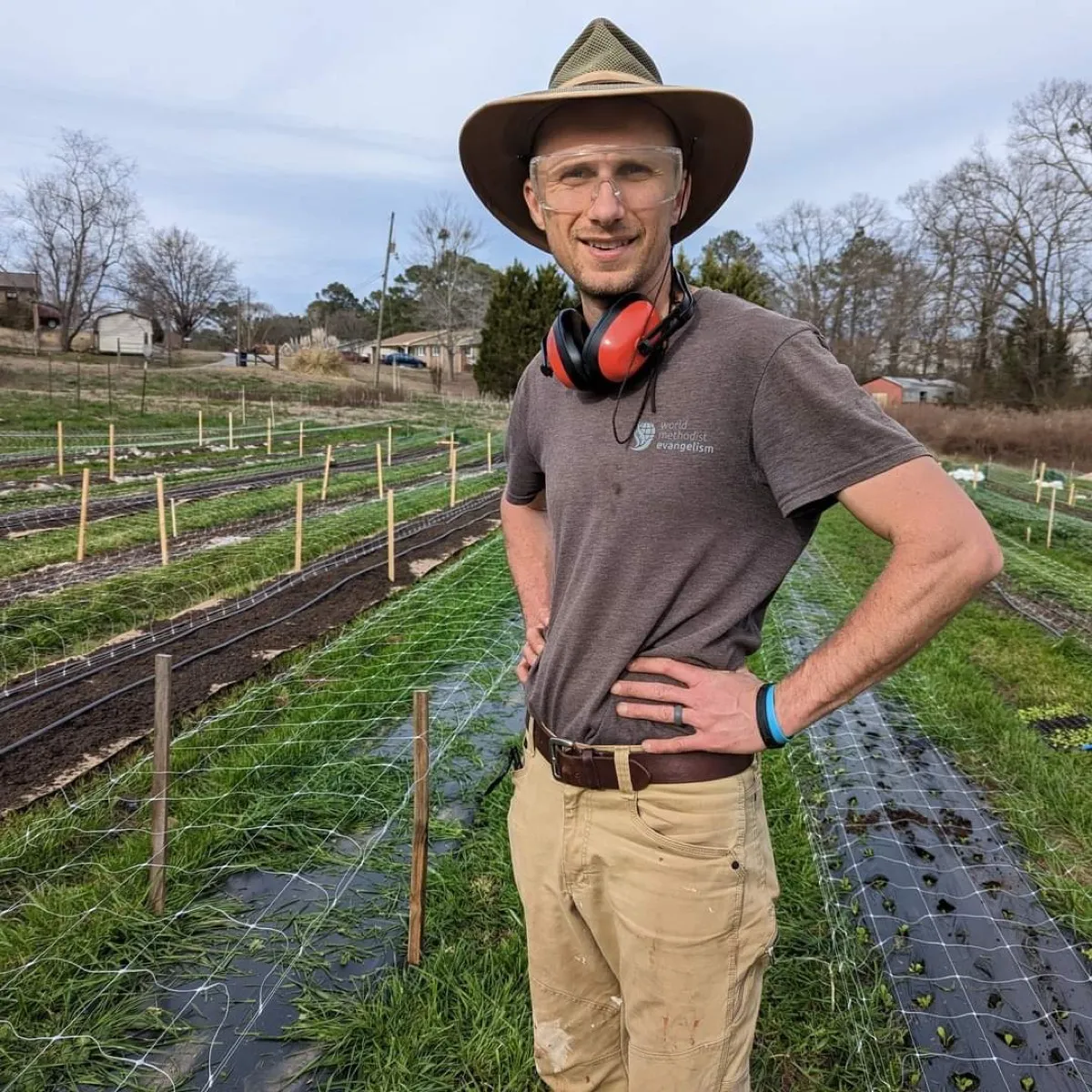
A few years ago I was living what looked like a good life. A flower farm on the edge of Anniston — flowers growing in a suburban neighborhood right behind a Walmart, of all places. A ministry I believed in. A family I loved. From the outside, the picture looked right.
I was getting up at three, four in the morning. Not because something was wrong. Because I was convinced that if I just worked hard enough, I could hold it all together. There was the farm. The church work. The writing. The businesses I was trying to build. Guitar lessons I was going to sign my youngest up for. A training run I kept meaning to do with my son. A conversation I kept putting off with my daughter.
The plates were spinning. More plates every week.
And the harder I worked, the more I fell behind.
That's the thing about spinning plates. It's not a strategy. It's a symptom. The frantic energy underneath it is trying to tell you something. I wasn't listening.
My wife Heather kept watching me. She knew something I didn't know yet. And eventually I ended up in a psychiatrist's office. Diagnosed. Medicated. And for a while, I got better.
Then I got off the meds too fast.
I had written publicly about mental health. I believed in getting help. I had no business being ashamed of a diagnosis. But somewhere underneath all of that, I still was. And so I stopped too soon.
I had no business being ashamed of a diagnosis. But somewhere underneath all of that, I still was.
I remember a Tuesday morning. I was supposed to run a few errands in town. I lived on the farm. This was a quick trip out and back. Home for lunch.
I was gone for six hours.
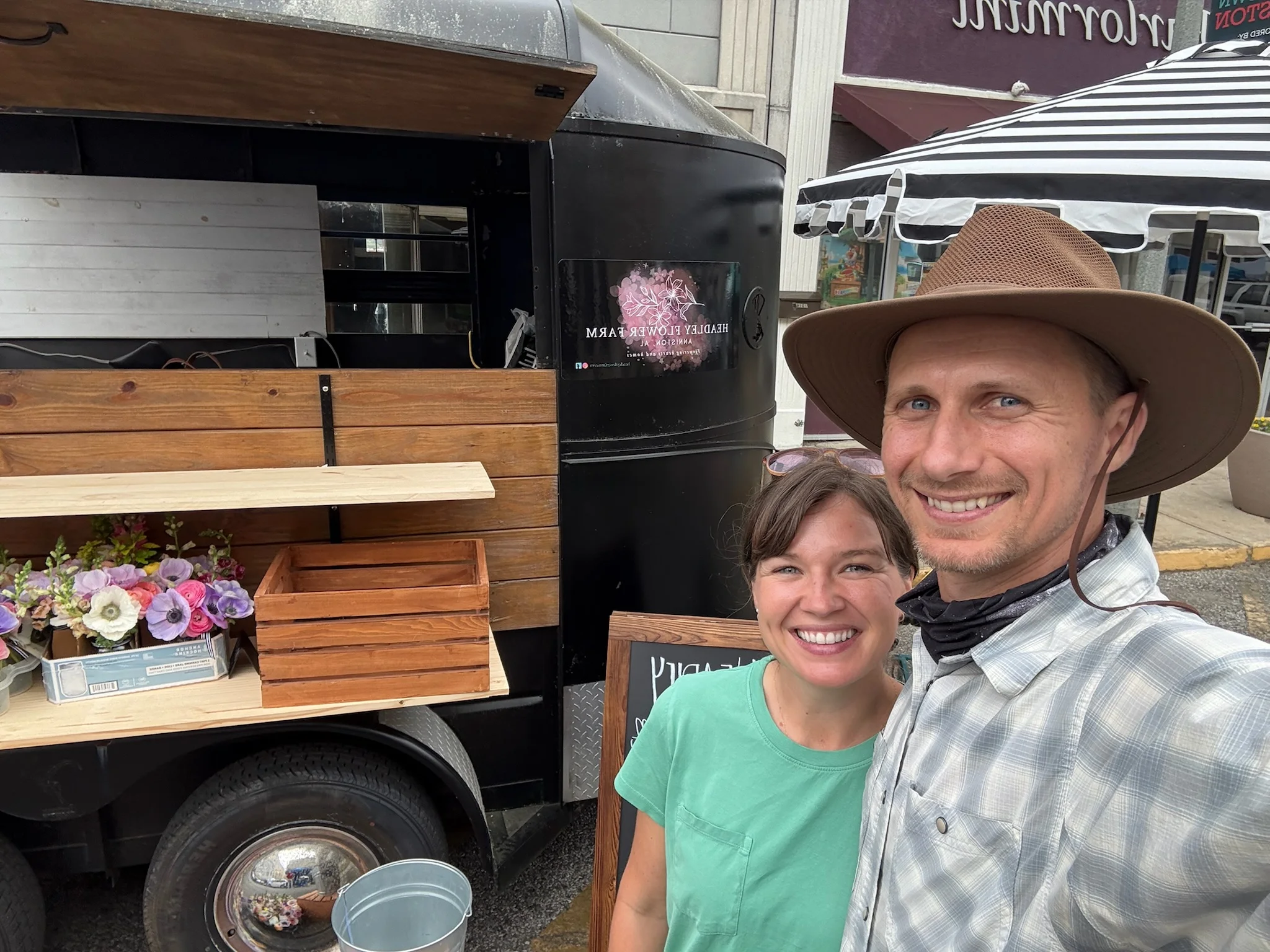
In that six hours I drove all over creation. I handed out free mason jar flower arrangements to strangers. I passed out business cards. I had the energy of ten men and the judgment of none. I came home to Heather standing in the kitchen with a look on her face I will never forget. I had no explanation. I didn't really understand yet what had happened.
But the money was going out. The farm was going sideways. The writing was on the wall.
We had to sell.
That is not a sentence I wanted to say. Not then. Not now, if I'm honest.
The farm was not just a piece of property. It was a vision. It was everything I thought I was supposed to be building. And having to let it go felt like failure. Felt like death. In some ways it was.
I became very depressed. I was hospitalized.
When I came home, I lived in my parents' camper for a month.
Let that land for a second. The man preaching this sermon to you today spent a month in a camper in his parents' backyard.
And something happened in that camper that I could not have manufactured. When there was nothing left to hold onto, something opened up. The grace came through Heather. Through my parents. Through Jason — some of you know Jason — who kept calling and texting and wouldn't let it go. I didn't receive it alone. I can't tell you exactly what it was. I can tell you I didn't earn it.
Stage III · Disclose the Clue
Unless a grain of wheat falls into the earth and dies, it remains just a single grain. But if it dies, it bears much fruit.
John 12:24.
Jesus is not talking about church growth strategies. He is not talking about annual conference metrics. He is talking about something that has to happen inside a person, inside a congregation, before new life becomes possible.
The seed doesn't try harder. The seed falls. The seed breaks open. The seed lets the process happen to it.
God is the one who brings the life. Not us. Not the right strategy. Not the next thing we try. God brings the fruit. But God does it through death. Through letting go. Through the thing we've been gripping finally slipping out of our hands.
Death is not the detour around resurrection. It is the mechanism for it.
The path goes through, not around.
Stage IV · Experience the Gospel
Now I know what you want abundance to mean. I know what we all want it to mean. Full pews. The families coming back. The church you remember.
I am not here to promise you that.
What I can tell you is what I've seen on the other side of the seed dying. People finding a place to belong that they couldn't find anywhere else. The single parent working a double shift who walks into a room and feels like a person for the first time in months. The one who got written off somewhere else. The one who was sure the church had nothing for her.
Those are real. Those are happening.
Maybe they're already happening here, and we're too busy counting the empty chairs to notice.
That's what the seed growing looks like. Not a full room. One person nobody else found.
I am not standing here because I have it figured out. I want to be honest about that. These last two years have shaken my faith harder than anything I've experienced. I still have questions. I still have mornings where I'm not sure what I believe about the shape of things.
Walt Whitman put it this way: I am large. I contain multitudes.
That can be true of a person. It can be true of a congregation. You can hold the grief and the gratitude at the same time. You can hold the empty chairs and the woman who finally felt seen. You can hold years of exhaustion and the possibility that God is doing something you haven't been able to see yet because you've been so busy trying.
This is not a one-time event. The pattern keeps going. Death and resurrection. Loss and new life. It happened to me. It will happen again. That's not a threat. It's a promise.
Stage V · Anticipate the Consequences
So before I sit down, I want to ask you something.
What are you holding onto that needs to die?
Maybe you're a parent trying to figure it out alone, and you haven't been willing to ask for help. Maybe you're in a marriage that needs a real conversation, and you've been finding reasons to wait. Maybe you're struggling with your mental health and you haven't taken action yet.
As somebody who has been there, as somebody who is still in it, I want to say this as plainly as I know how: take action. Love yourself. Love your neighbor as yourself.
Two of my favorite poet-theologians — Post Malone and Jelly Roll — wrote a song. Not exactly standard Methodist hymnody. But listen:
*"Yeah, this one's for the losers, the outcasts and the sinners, the ain't-never-been-no-winners. Let's hear it for the losers — ain't got nowhere to fit in, there's a place you can always get in.
You might be lonely, but you're never alone. You're right here where you're supposed to be. Right here with all the losers. The ones like you and the ones like me."*
That's us. That's this room. Church is where the losers belong.
— "Losers" by Jelly Roll & Post Malone · YouTube · Spotify
Because here's what Jesus said right after the grain of wheat:
Those who love their life will lose it. But those who lose their life for my sake will find it.
The seed must die. And God brings it to life.
What happened after
I shared this sermon on Facebook on the day I preached it — the manuscript, the Facebook Live link, a note that it was my first time in the pulpit after twelve months away for mental health.
The first comment came from someone who was curious about SermonCoach — whether the sermon was really "mine" if I used an AI tool to prepare it.
My reply:
"It asks you questions and you write the sermon. It refuses to write for you. SermonCoach is a Socratic coach that guides you to think more deeply."
That exchange produced the clearest two-sentence description of the tool I've written. The objection helped.
The post got 23 likes and 12 comments — more than I expected from a personal Facebook page. Some of the responses were skeptical. Some were warm. One pastor wrote that he was glad to see "resurrection happening in Matt's life and ministry."
He was the pastor who invited me back to the pulpit.
Andy Curtis, Lead Pastor, Jacksonville First UMC:
"I'm so glad to see resurrection happening in Matt's life and ministry. Inspiring!"
Bruce Cunningham, Jacksonville First UMC:
"Matt's testimony was one of the most powerful articulations I have ever heard of the saving grace offered to us by Jesus' life, death, and resurrection. To God be the glory!"
The sermon was about a seed dying. The day it was preached, the pastor who invited me said he watched resurrection happening.
I don't know what else to say about that.
A few days later, someone I didn't know left a comment on the post:
Dzago Chatsama:
"This is an amazing app. I would recommend this app. So thought provoking. When you using it to prepare the sermon, it acts as if it is also preaching to you in that moment. I love it. Will try to subscribe to it."
"It acts as if it is also preaching to you in that moment."
He didn't have a word for what the tool was doing. He just described what it felt like. That's the best description of the Socratic experience I've heard from anyone who wasn't trying to describe it.
This sermon was prepared using the Lowry Loop coaching method in SermonCoach. The coaching session drove the structure; the words are mine. If you want to try the same approach on a passage you're working on: sermoncoach.app/demo — no account needed.